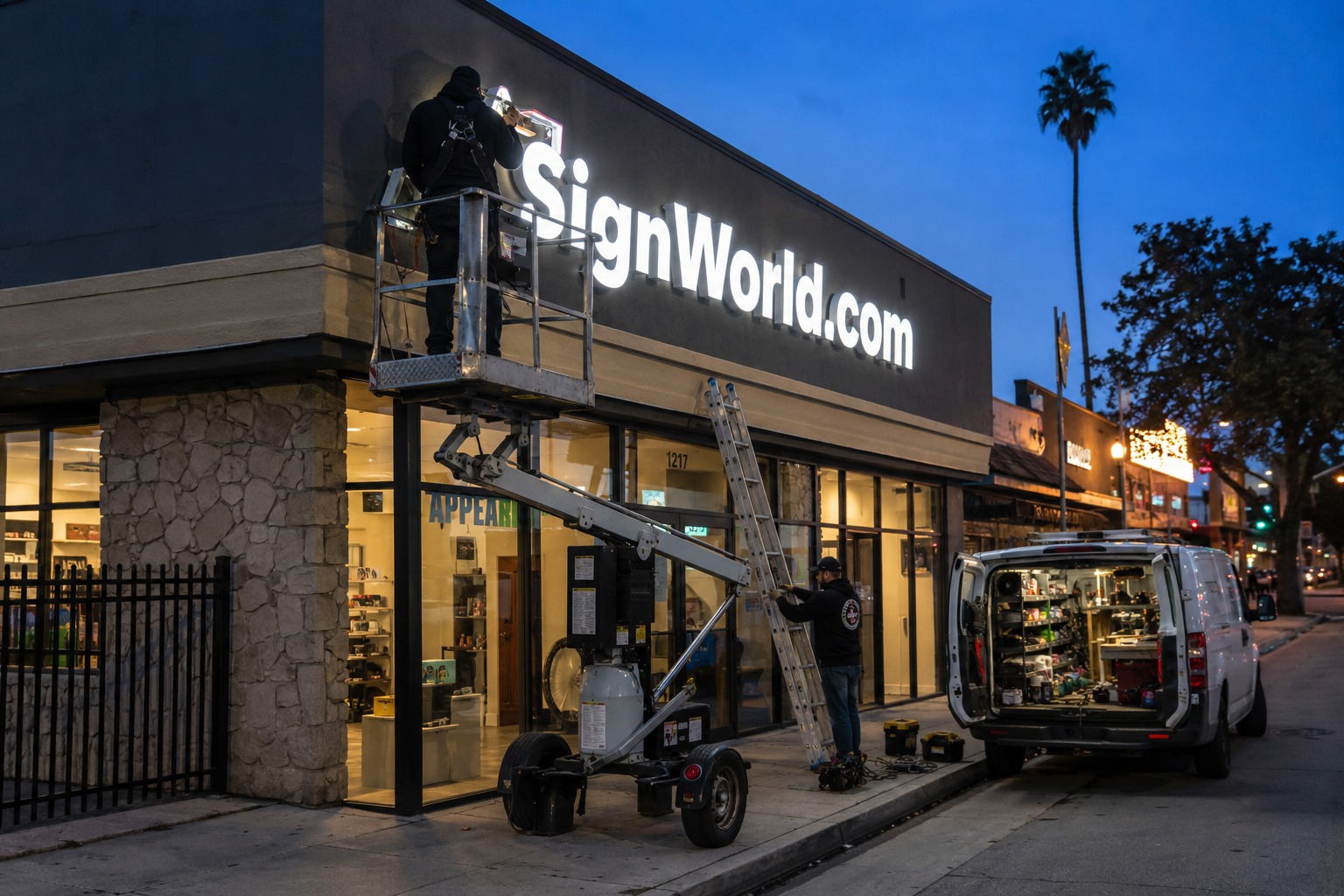
I can imagine SignWorld.com as a marketplace where a buyer finds the right fabricator or installer without pretending that every sign project is interchangeable. Commercial signage is shaped by distance, equipment, permits, access, materials, electrical work, and local knowledge. A useful marketplace would capture those differences early. It would help a buyer describe the job clearly, then introduce shops that are equipped and available for that specific work.
Broad home-service platforms such as Angi make a basic matching pattern familiar: explain the need, identify the location, and connect with providers. SignWorld could go much deeper for signage. An intake for halo-lit channel letters should ask about wall material, letter height, raceway rules, electrical access, landlord criteria, drawings, and survey status. A request for a monument sign needs different facts, including setback, utilities, foundation conditions, tenant panels, and visibility from the road.
Better briefs create better matches
I would build the first product around structured project briefs. Buyers often arrive with a photo, a rough size, and an opening date. Makers need enough information to judge feasibility before they spend hours estimating. The marketplace can guide both sides toward a useful starting package: location photos, measured elevations, brand files, desired illumination, target dates, and known approval rules. It should also state what remains unknown so an installer can price a survey instead of guessing.
Visual discovery sites such as Houzz show the value of project photography paired with provider profiles. For signs, galleries should be filtered by real capabilities rather than style alone. A shop could show push-through cabinets, reverse-lit letters, routed aluminum, digital message centers, or fleet graphics, then identify its production limits and service radius. Buyers would see relevant proof. Makers would spend less time answering leads that do not fit their equipment or crew.
Trust would depend on verified details. The marketplace should distinguish a broker from a fabricator, a listed installer from a licensed electrical contractor, and a nationwide coordinator from a local shop. None of those roles is inherently better. Problems begin when the role is unclear. Profiles could document insurance, licensing where applicable, installation capacity, equipment, typical project size, and recent examples. Reviews should attach to completed jobs and describe communication, schedule, workmanship, and issue resolution separately.
A market for commercial capability
Thomasnet demonstrates how industrial buyers search by supplier capability. That model fits the less visible side of signage. A fabricator may need formed faces, wholesale channel letters, engineering, crane access, or a field survey in another state. SignWorld could serve business-to-business requests as well as end buyers, creating a practical exchange for overflow production and remote installation.
I would keep the fee model aligned with useful introductions. Charging for every vague lead encourages volume and disappointment. A better approach may combine free profiles, qualified project fees, and optional tools for shops that want scheduling or quoting support. The platform should make the commercial terms clear before either side invests time. It should never insert itself into a relationship merely to collect a toll.
Project records could become useful without exposing private customer information. A completed record might preserve approved drawings, survey notes, color specifications, permit status, installation photographs, and warranty dates for the parties involved. When a tenant expands or a service call arrives, the buyer would not have to reconstruct the job from scattered messages. Shops could spend more time solving the current need and less time asking for files that already existed.
Public maker communities such as Maker Faire remind me that people care about how things are made. SignWorld could bring some of that curiosity into a professional setting. Short shop profiles could explain bending, welding, routing, painting, acrylic forming, LED layout, and field installation. That material would help buyers understand price differences while giving skilled teams a chance to show judgment that a star rating cannot capture.
Start with one repeatable request
I would not launch with every sign type and every geography. I would choose one repeatable commercial request, probably storefront packages in a defined region, and work directly with buyers and shops. The first goal would be a brief that produces accurate responses. The second would be a clean handoff from online request to survey. The third would be a record of what happened, including change orders and final photographs.
SignWorld.com makes the marketplace easy to explain. The name is broad enough for makers, installers, specifiers, and buyers, yet specific enough to set expectations. I would bring experience in domains, positioning, and customer acquisition. The operating partner would need deep respect among sign professionals and a firm view on qualification. Together, the name could become a place where good project information meets proven commercial capability.